
A physiotherapist finishes an assessment and tells the patient they need eight visits over the next month. The patient books the next one at the counter, comes twice, feels a little better, and stops booking. Nobody calls them, because the front desk is checking in the 10:30, answering the phone and trying to get a claim number out of an auto insurer.
I've spent the last four years building AI systems and agents for businesses, and physiotherapy and wellness clinics are a good fit for an AI Receptionist for a reason most owners don't expect. The phones matter, but the bigger job is follow-through: getting every patient booked through their plan, keeping the insurer paperwork straight, and filling the gaps a no-show leaves in a practitioner's day.
This post covers physio, chiropractic, massage therapy, naturopathic, acupuncture and similar clinics. If you run a dental office or a family medical clinic, the AI Receptionist for a dental office post is closer to your day.
What an AI Receptionist does at a physio or wellness clinic
An AI Receptionist is an AI Employee that holds the front-desk job. It reports to someone, usually the clinic manager or the owner-practitioner, and it has logins to the phone line, text and email, and the clinic's booking software. It also has written rules about what it can do on its own. Every call and message goes into a log the manager can read.
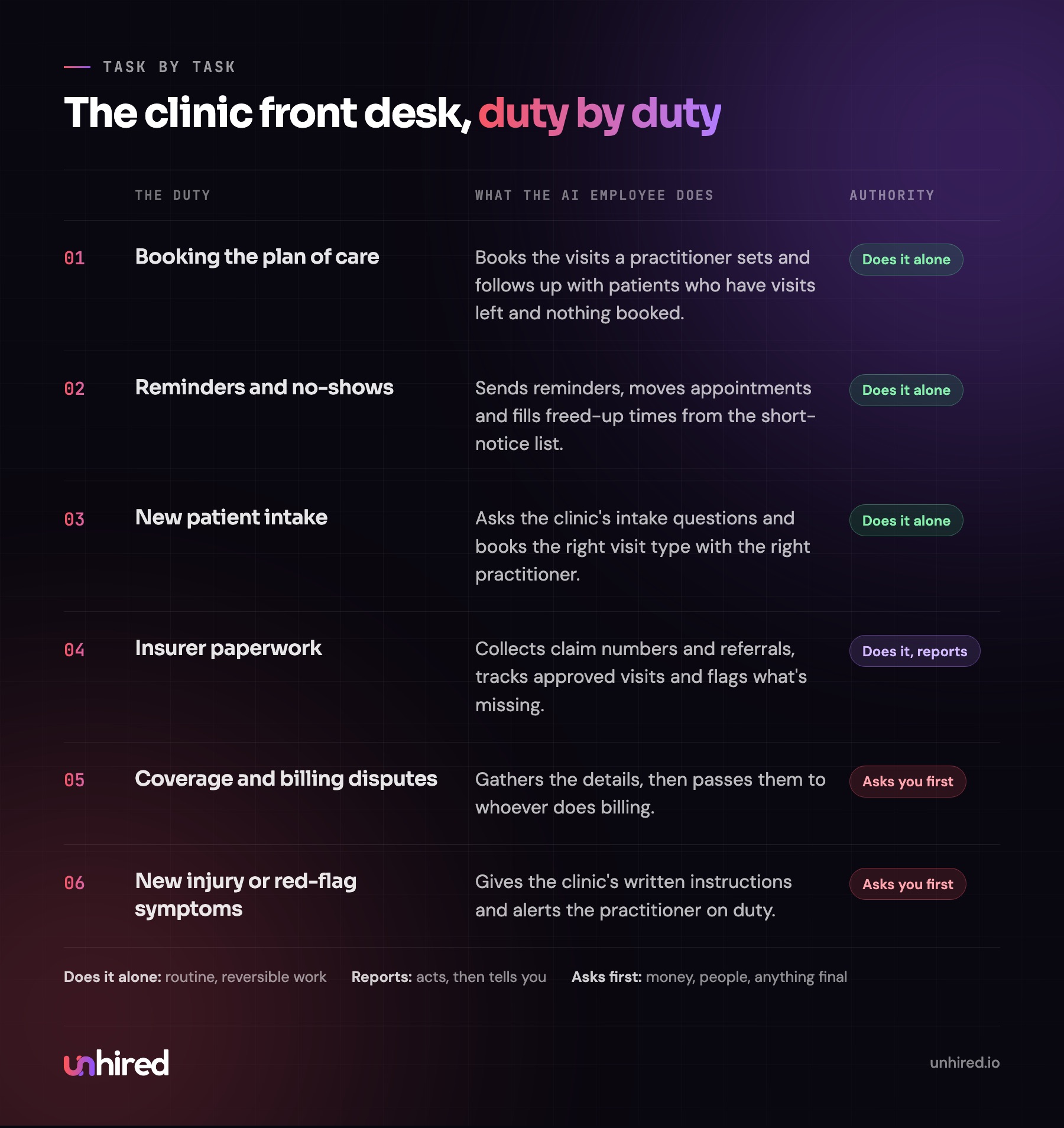
Five duties take most of the hours at this kind of clinic.
Booking the whole plan of care
When a practitioner sets a plan (twice a week for four weeks, say), the AI Receptionist books the visits, or at least the next two, before the patient leaves. If the patient wants to wait, it follows up by text that evening with times that fit the plan.
Then it checks every day. Any patient with visits left on their plan and nothing on the schedule gets a message with a few open times. If they don't answer after two tries, the practitioner gets a short list of names. Most front desks know this should happen and never get to it.
Reminders, no-shows and the short-notice list
A no-show at a clinic leaves a practitioner standing in an empty room for 45 minutes. The AI Receptionist sends reminders the day before, handles the "can I move to Thursday" replies, and offers freed-up times to patients on the short-notice list. It applies the clinic's cancellation policy the way it's written, including the fee if there is one, and passes exceptions to the manager.
New patient intake and the right practitioner
New patient calls at a multi-discipline clinic come with a sorting question. Someone with low back pain after a fall might need a physio assessment. Someone who wants "a massage for stress" needs a registered massage therapist, and maybe a note about whether their benefits plan needs a referral.
The AI Receptionist asks the intake questions the clinic has set, books the right visit type with the right practitioner, and sends the intake and consent forms. It doesn't decide what's wrong with anyone. If the answers don't fit a clear booking rule, it books a short call with a practitioner instead of guessing.
Insurer and third-party paperwork
This is where a lot of front-desk time goes at physio and chiro clinics. Auto insurance claims, workers' compensation cases and extended health plans each want something different: a claim number, an adjuster's name, a doctor's referral, a visit limit, a pre-approval before the next block of treatment.
An AI Receptionist collects those details at booking, checks the file before each visit, and tells the patient early when something is missing. It can track how many visits a plan has approved and warn the practitioner before the limit is reached. Coverage decisions, denied claims and disputes with an adjuster go to whoever does billing.
Calls, texts and after-hours
Calls that come in while the desk is busy, or at 8 pm, go to the AI Receptionist. It books and reschedules, and it answers questions from the clinic's own information: parking, what to wear to a first appointment, whether the clinic direct-bills a given insurer, and how long an assessment takes.
What stays with the practitioners
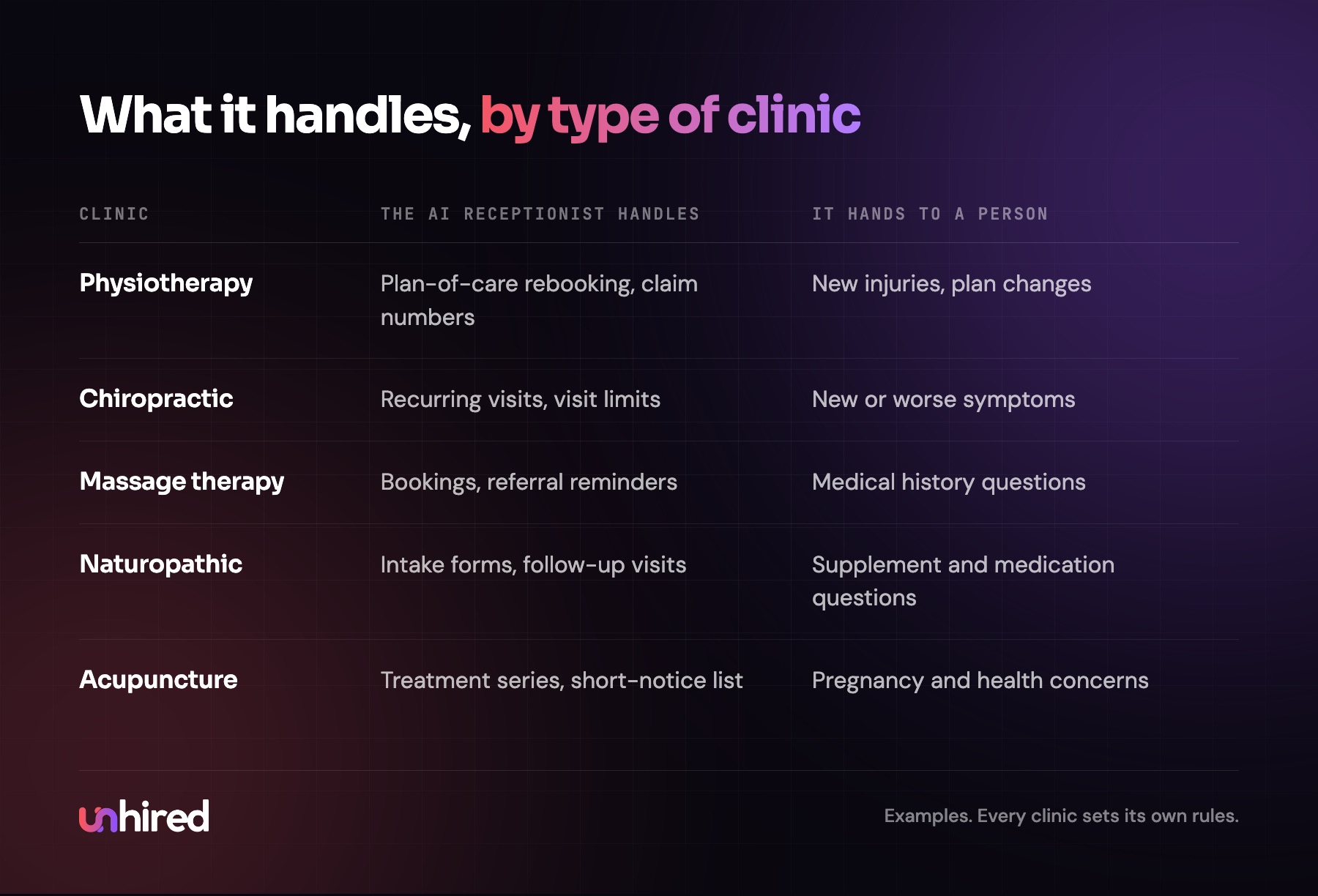
Health clinics need tighter rules than most businesses. These always go to a person, with a written summary attached so nobody has to ask the patient to repeat it:
- New injuries, new or worsening symptoms, and anything the clinic lists as a red flag, such as numbness, chest pain or a recent fall in an older patient. The AI Receptionist gives the clinic's written instructions, including calling emergency services when the clinic's rules say so, and alerts the practitioner on duty.
- Clinical questions. "Should I keep doing the exercises if it hurts?" goes to the treating practitioner. The AI Receptionist books a call back or the next visit.
- Changes to a plan of care. It books what the practitioner set. Adding visits, stopping treatment or switching practitioners is the practitioner's call.
- Coverage decisions and billing disputes. It collects the paperwork. It doesn't tell a patient what their insurer will pay beyond what the clinic has published.
- Upset patients and anyone who asks for a person. That handoff should happen the first time they ask.
Patients should also know they're talking to AI. A good setup says so at the start of the call and offers a person whenever asked. The post on whether customers should know they're talking to an AI Employee covers how to word it.
Patient privacy before anything is connected
A physio or wellness clinic holds health information, even if it doesn't feel like a medical office. Injury details and insurer claim files are both sensitive.
In the US, a vendor that creates, receives, keeps or sends protected health information for a clinic is a business associate under HIPAA, and the clinic needs a signed business associate agreement before any data is shared. The HHS Office for Civil Rights lists the required contract provisions. Other countries have their own health privacy laws with similar ideas.
The setting owners most often get wrong is access. An AI Receptionist needs the schedule, contact details, visit types and insurer fields. It doesn't need treatment notes, so the connection to the clinic software should leave them out. Ask any provider where call recordings and text logs are stored, for how long, and who can read them.
A day at a physiotherapy clinic
Here's an example day at a clinic with four physiotherapists and two massage therapists. Three items go to a person, and that's normal.
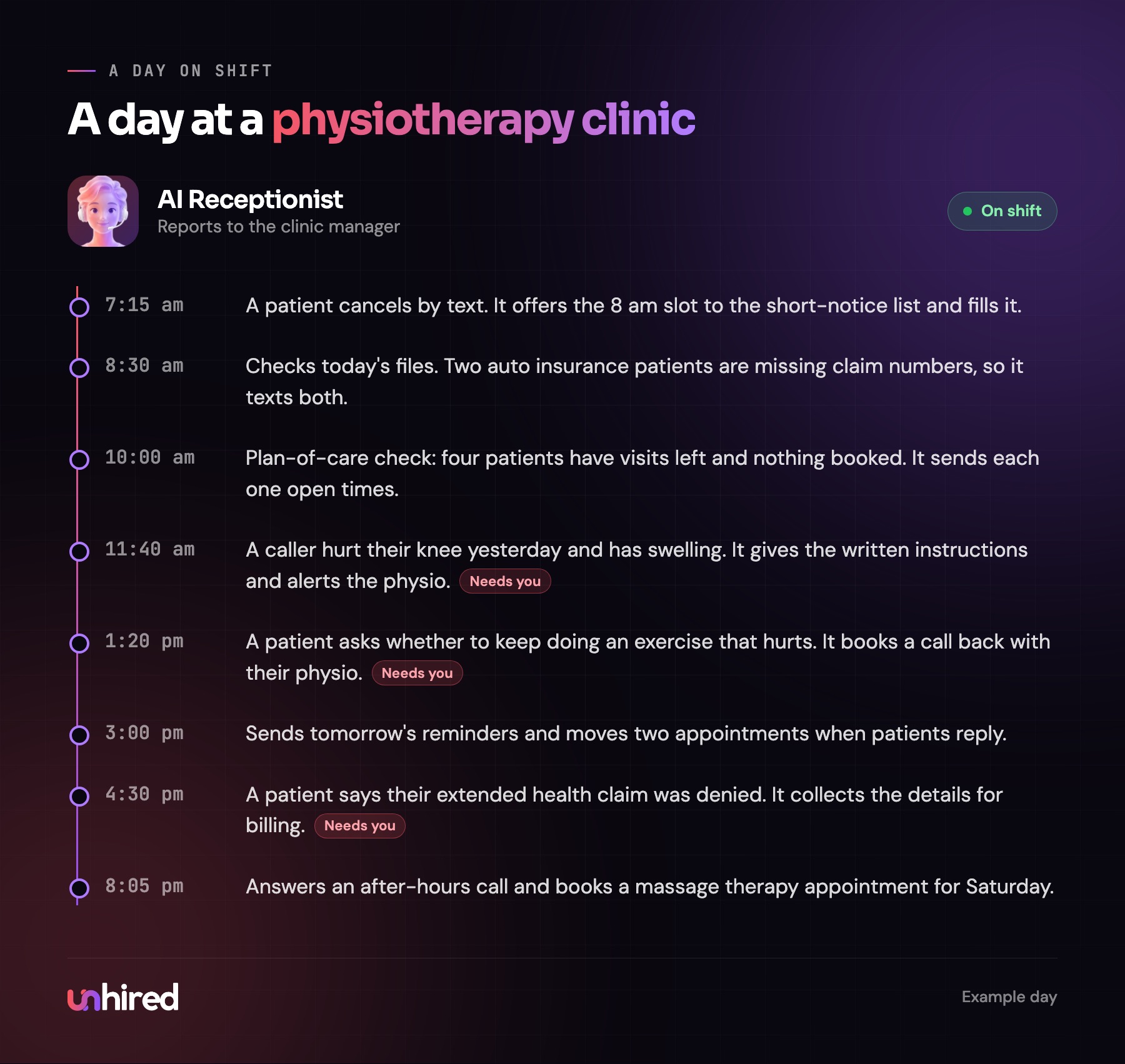
The 7:15 cancellation gets filled before the first patient arrives. The plan-of-care check finds four patients with visits left and nothing booked, which no one at the desk had time to look for. The new injury, the exercise question and the denied claim all reach a person with notes attached.
What a clinic front-desk hire costs
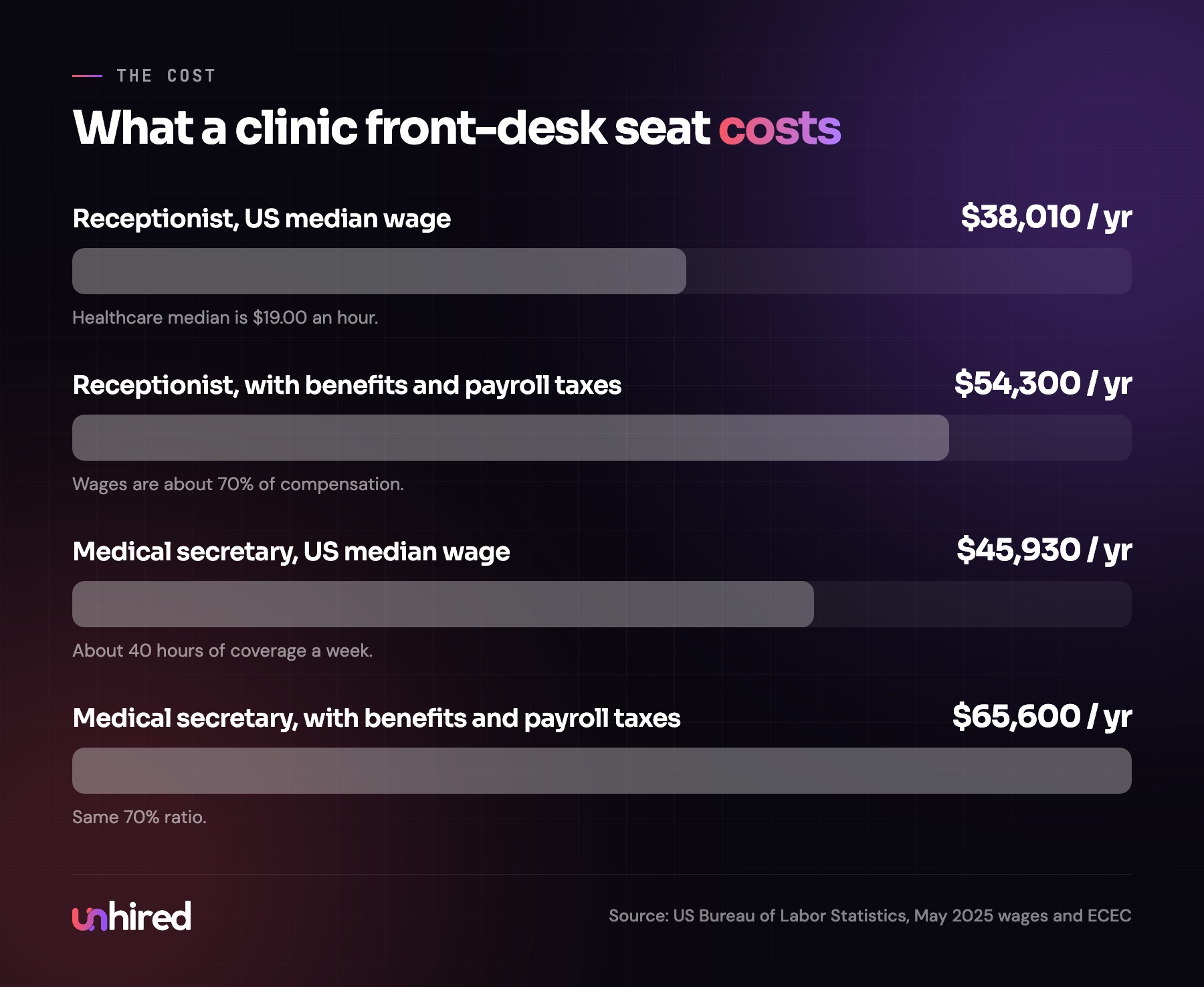
The US Bureau of Labor Statistics puts the median wage for receptionists at $38,010 a year as of May 2025, and $19.00 an hour in healthcare and social assistance. Clinics that want someone who can also handle insurer billing often hire a medical secretary or administrative assistant instead, and the BLS median for medical secretaries and administrative assistants was $45,930 in May 2025.
Wages are about 70% of what US private employers spend on compensation, according to the BLS Employer Costs for Employee Compensation report. Benefits and payroll taxes make up the rest. Then there's the job ad, training on the booking software, and covering lunches, sick days and vacation, which at a small clinic often means a practitioner answering the phone between patients.
How much you'd pay for an AI Receptionist at a clinic
AI Employees are usually priced one of two ways.
You can assemble one from software: an AI phone and text tool, a connection to your booking system and a texting service. The subscriptions are the smaller cost. The larger one is the time someone spends writing the booking rules for each practitioner and visit type, mapping the insurer paperwork, testing it, signing the privacy agreements and keeping it current.
Or a provider builds and maintains it, usually for a monthly fee. It costs more than the bare software, and the setup and log reviews become someone else's job.
What moves the price: how many channels it covers, whether your clinic software has a clean integration, how many practitioners and locations it books for, how much insurer paperwork it tracks, call volume, languages, and how much maintenance is included.
To compare quotes, put them next to the full cost of the seat. At the BLS ratio, a receptionist at the US median comes to about $54,300 a year with benefits and payroll taxes, and a medical secretary to about $65,600. Either covers about 40 hours a week, and patients book at 9 pm.
How an AI Receptionist is set up at a clinic
Setup is mostly the same work as training a new front-desk hire, with the privacy steps done first.
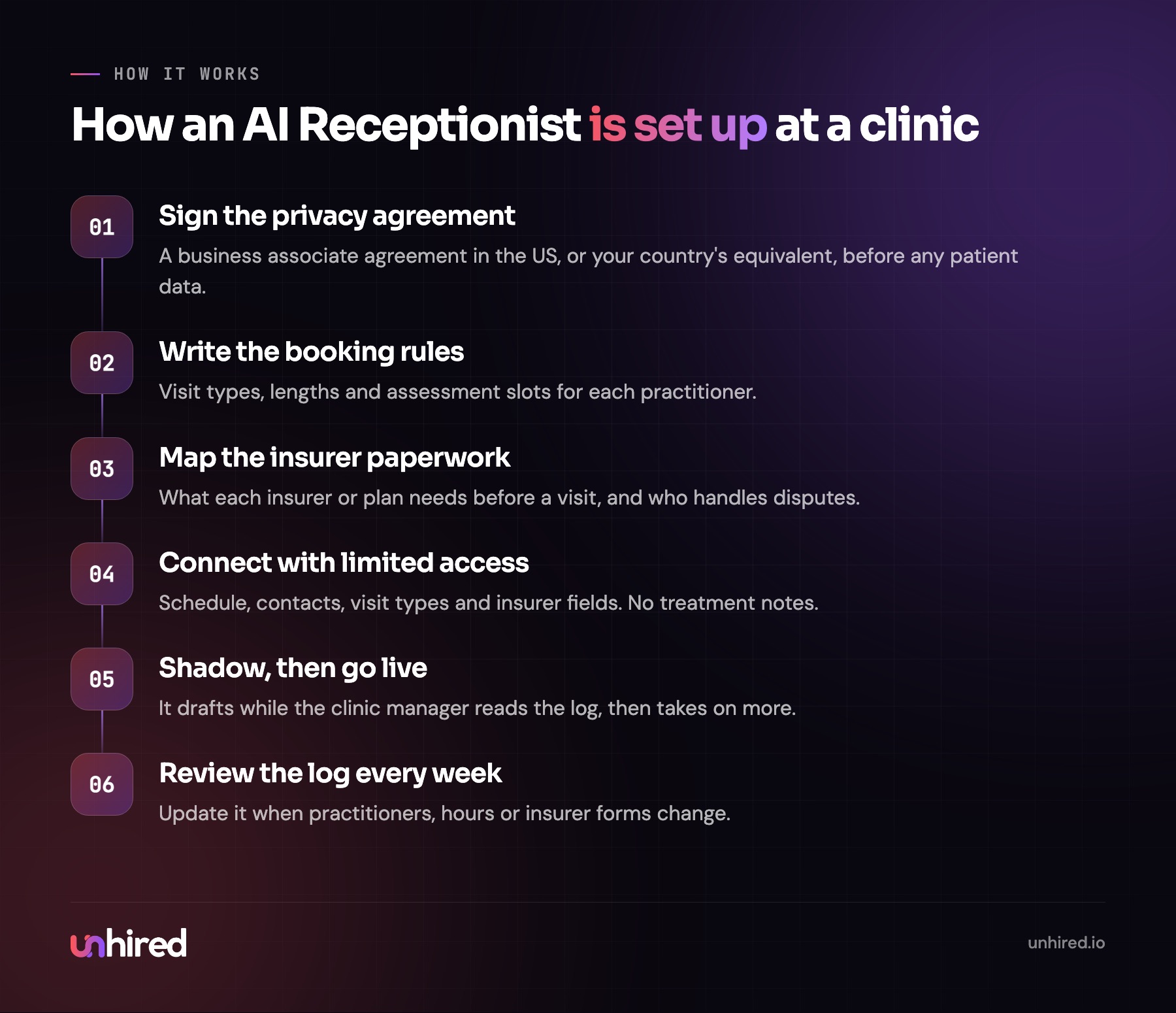
The booking rules take longer than owners expect. Each practitioner has their own visit lengths, assessment slots and days off, and each insurer has its own paperwork. Write them down once, carefully, and the AI Receptionist follows them on every booking.
Then run a shadow period of a week or two, where it drafts bookings and messages while the clinic manager reads the log. After that, someone still reviews the log weekly. Practitioners join and leave, insurers change their forms, and an AI Receptionist nobody updates starts booking a schedule that no longer exists.
Is your clinic's front desk a good fit?
If your desk spends most of its day on phones, texts, rebooking and insurer paperwork, an AI Receptionist can hold most of the seat, with a person at the counter for check-ins and the patients who need a face.
If the desk is mostly in-person work, such as walk-ins and helping older patients with forms, keep the person there. An AI Receptionist can still take the calls and the plan-of-care follow-ups off their plate.
To find out which you are, pull one number from your booking software this week: how many patients have visits left on their plan of care and nothing booked. Then have the desk tally a week of calls and messages by type. Those two lists show you which duties are rules and which need a person. Some websites offer free assessments that check whether a role like this can be filled by an AI Employee, which is a reasonable next step once you have them.