
It's 7:10 on a Tuesday at a physiotherapy clinic with five practitioners. One of them texts the front desk: sick, not coming in. She has six patients booked between 8 and 3. Somebody has to work out which of them can move to another practitioner, which ones want to wait for her, and how to reach all six before the first one leaves home. Meanwhile two new patients emailed overnight asking for appointments, and a third filled in the web form with a phone number that's missing a digit.
Every business that runs on appointments has a morning like this every few weeks, and a smaller version of it every day. That is the job an AI Scheduling Assistant is built for. Below is what it does, where it should stop, and what the job costs next to hiring a person.
What an AI Scheduling Assistant is
An AI Scheduling Assistant is an AI Employee that holds the scheduling job. It has logins to the booking system and the tools clients write in on, a written set of rules for how the business books, and a manager it reports to. Every booking, change and message goes into a log someone can read.
I've spent the last four years building AI systems and agents for businesses, and scheduling is the job where the rules live in someone's head more than anywhere else. A new patient assessment takes 60 minutes but a follow-up takes 30. One lawyer won't take consultations on Fridays. The property manager's showings need 20 minutes of driving time between units. None of that is in the booking software. It's in the person who has done the schedule for six years, and getting it written down is most of the work of setting one up.
The scheduling job, duty by duty
I'd split the job into six duties, each with the authority I'd give it on day one.
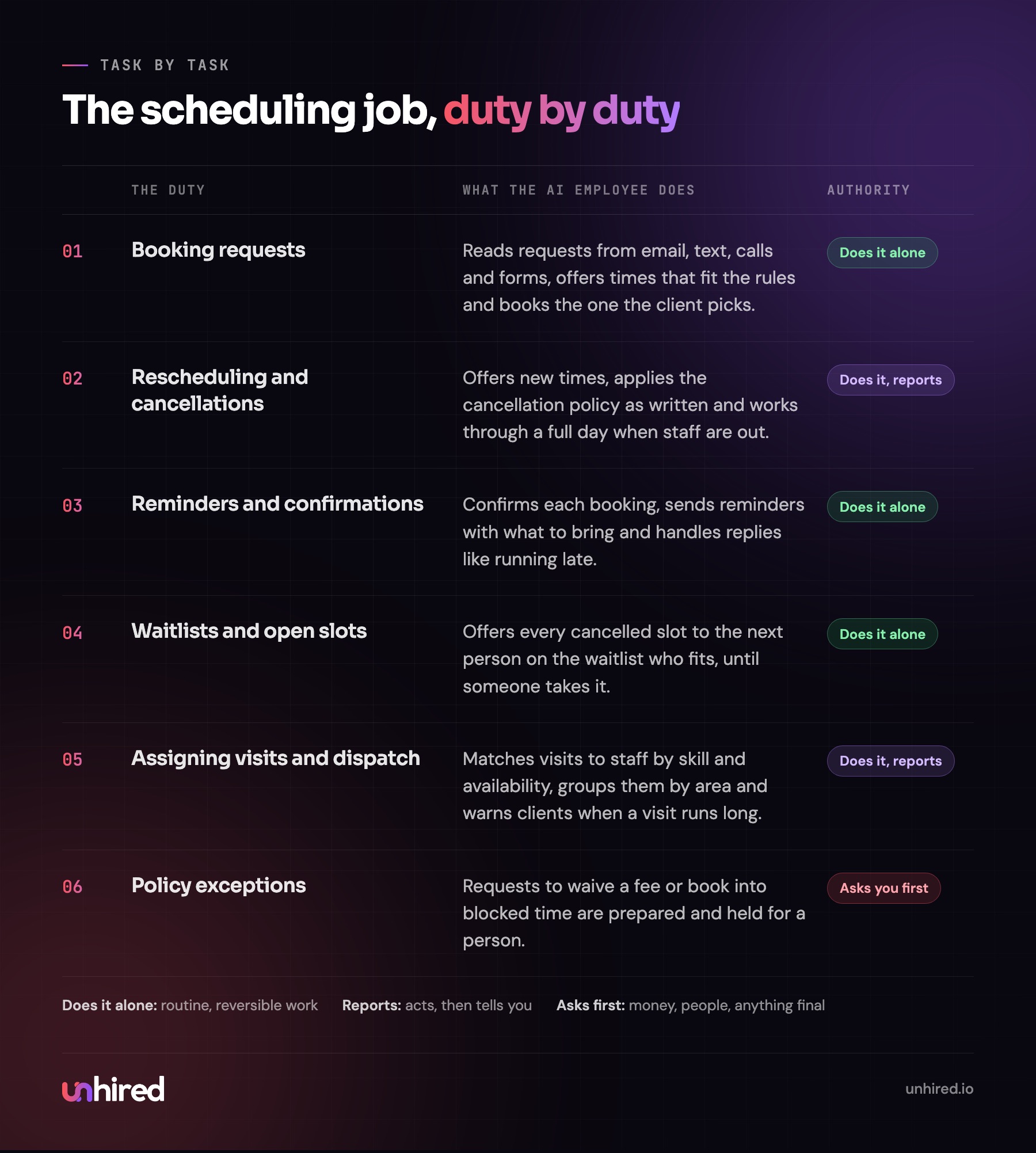
Taking booking requests from every channel
Online booking pages help, but plenty of clients still email, text, call or fill in a contact form that says "Can I come in next week sometime?" The AI Scheduling Assistant reads each request and works out what kind of appointment it is. Then it offers a couple of times that fit the rules and books the one the client picks. If a request doesn't fit any appointment type it knows, it asks a person instead of guessing.
Rescheduling and cancellations
This is the part that eats the day. When a client cancels, it offers new times and applies the cancellation policy as written. When a staff member is out, it works through their whole day: who can move to a colleague, who would rather wait, who needs a call because they're elderly or don't read texts. My AI Receptionist post covers the phone side of the same work.
Reminders and confirmations
It sends the confirmation when the booking is made, a reminder a day or two ahead and a second one the morning of, with whatever the client needs to bring or do first: intake forms, fasting instructions, documents for a legal consultation, the gate code for a property showing. Replies like "running 10 minutes late" or "can we do Thursday instead" get handled in the same thread.
Waitlists and open slots
Every cancellation is an empty slot that someone on the waitlist would have taken. The AI Employee keeps the list, and the moment a slot opens it offers it to the next person who fits, in order, until someone says yes. Most small businesses don't do this at all, because nobody has time to call through a list at 4:45 pm for a 9 am opening.
Assigning visits and dispatch
For businesses that send people out (home care agencies, mobile vets, IT support firms, cleaning companies for offices, couriers), scheduling is also dispatch. The AI Scheduling Assistant assigns each visit to someone with the right skills and availability, groups visits so nobody crosses town twice, and tells the client when to expect them. When a visit runs long, it warns the next client.
Daily and weekly schedule reports
Each evening it sends the manager tomorrow's schedule with the gaps, double-bookings and anything unconfirmed marked. Each week it reports on no-shows and how full each person's calendar was, which is usually a number nobody has looked at before.
What it looks like in different businesses
The duties barely change. The rules do.
At a dental or medical clinic, the AI Scheduling Assistant books by procedure length and chair or room, sends intake forms ahead of new patient visits, and fills same-day openings from the waitlist. At a law firm, it books consultations by practice area and lawyer, runs the firm's conflict check questions before anything is confirmed, and sends the document list for the meeting. A salon or spa uses it to book by service and stylist, including the services that need a patch test or a deposit. A property management company uses it for showings and for coordinating maintenance visits between tenants and vendors. And a home care agency uses it to match caregivers to clients, cover a shift when someone calls in sick and keep families told who is coming.
What should stay with a person
These are the lines I'd draw at any business:
- Policy exceptions. It applies the cancellation fee as written. Waiving it for a long-time client is a person's call.
- Overriding someone's blocked time. If a practitioner has blocked Thursday afternoon, the AI Employee doesn't book into it because a client pushed.
- Anything that needs a professional judgment. Whether a patient's symptoms need an urgent slot, whether a legal matter is a conflict, whether a job is safe to send one person to alone. It collects the details and hands them over.
- Upset clients. A complaint about a missed appointment or a long wait goes to a person with the history attached.
- Anyone who asks for a person gets one.
It should also say it's an AI when it writes to clients. People booking an appointment rarely mind, and the few who do can ask for someone else.
A day on the job
Here's an example day for an AI Scheduling Assistant at that physiotherapy clinic. Two items go to the clinic manager.
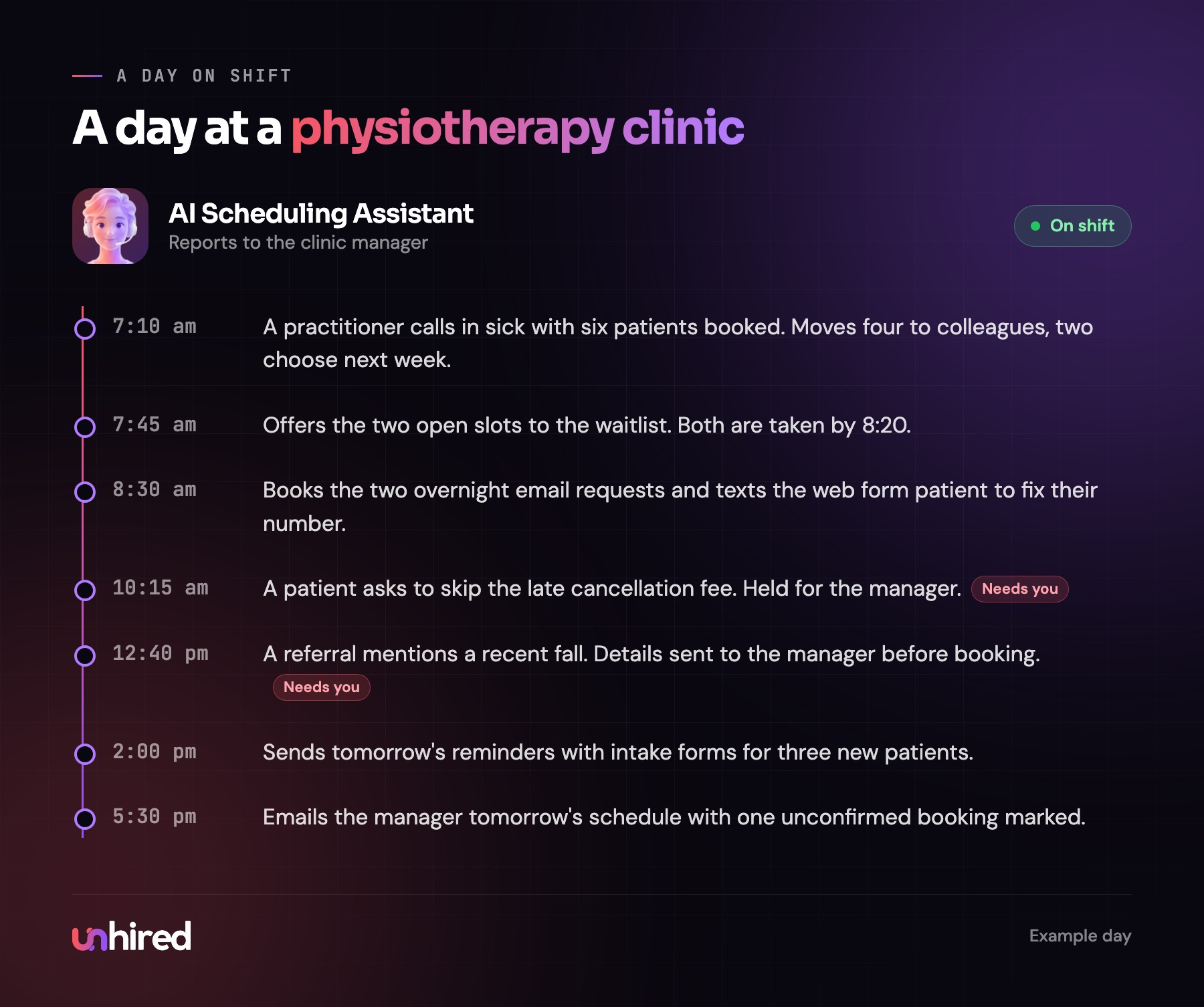
The sick call is handled before the doors open: four of the six patients move to other practitioners, two choose to wait for next week, and every slot left over goes to the waitlist. The overnight requests are booked by 8:30. The patient asking to skip the late cancellation fee and the referral that mentions a recent fall both reach the manager with everything needed to decide.
What a scheduler costs
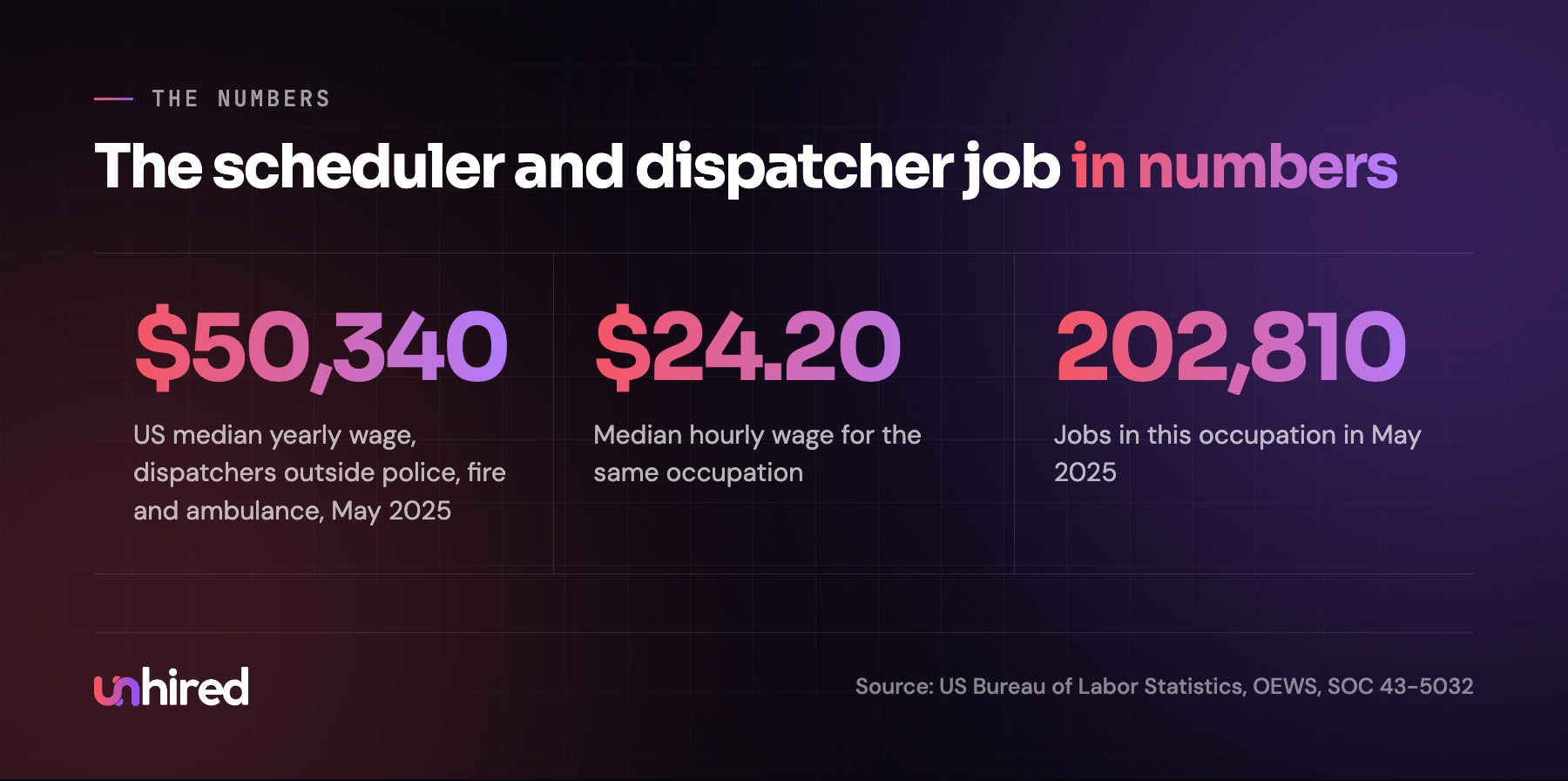
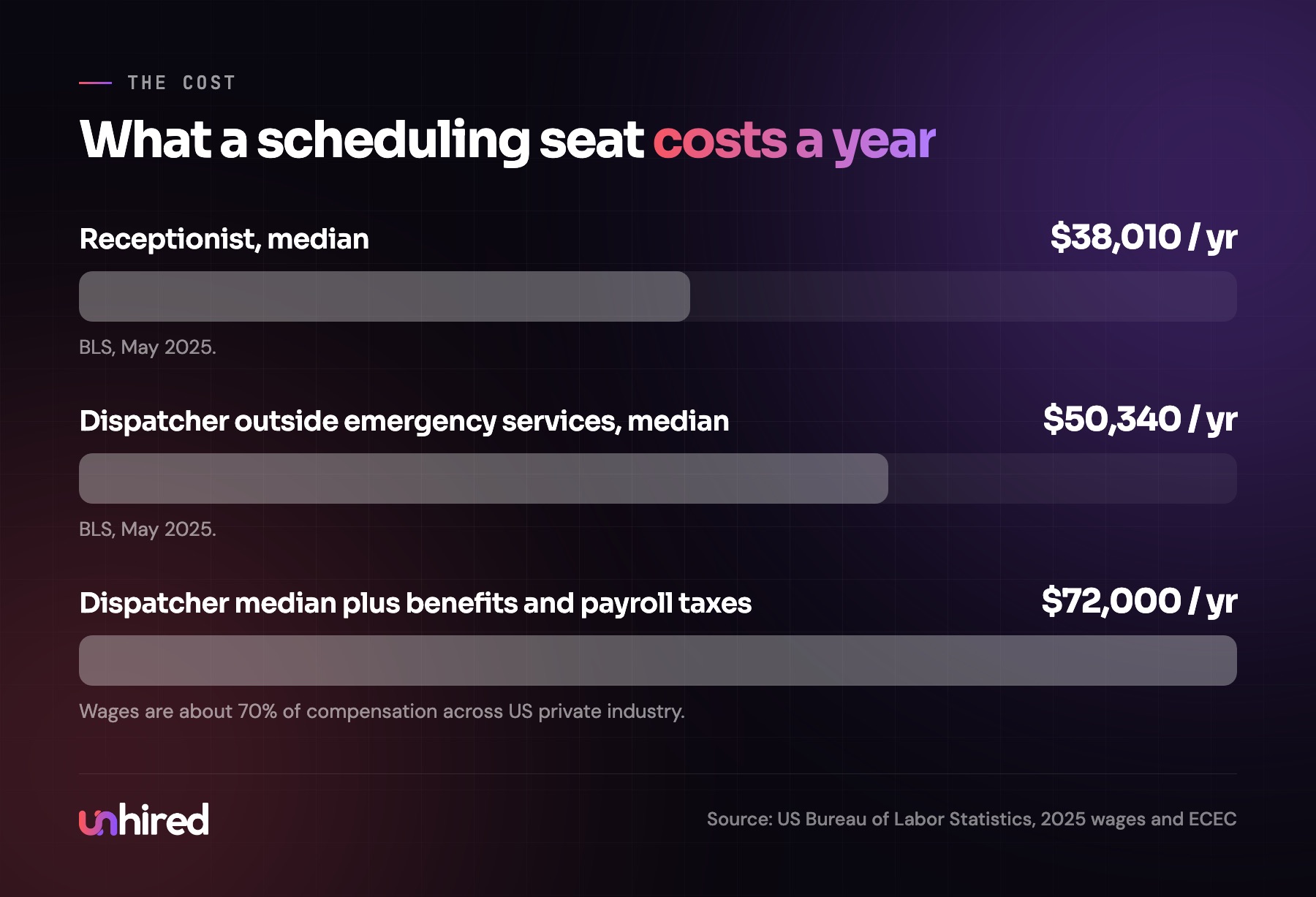
Scheduling is usually part of a receptionist's or office administrator's job, but where it's a role of its own, it's often called a scheduler, coordinator or dispatcher. The US Bureau of Labor Statistics puts the median wage for dispatchers outside police, fire and ambulance at $50,340 a year in May 2025, or $24.20 an hour, across about 202,810 jobs. For comparison, the median wage for receptionists, who handle much of the booking at smaller offices, was $38,010.
The wage is only part of the cost. Across US private industry, wages and salaries are about 70% of what employers spend on compensation, according to the BLS Employer Costs for Employee Compensation report. At the dispatcher median, that puts one person at about $72,000 a year, before recruiting, training and covering vacations. Scheduling requests also don't stop at 5 pm, and a lot of clients book in the evening.
How much you'd pay for an AI Scheduling Assistant
There are two ways to get one.
Building it yourself. Most booking systems now include automated reminders and some AI features, and AI agent platforms can connect to calendars, email, texting tools and many booking systems. The software is usually the smaller cost. The bigger one is the time it takes someone on staff to write down the booking rules, connect each system, test it on real requests and keep it current.
Having it built and maintained. A provider sets it up, connects the systems, writes the rules with the business and keeps it updated, usually for a monthly fee.
What drives the price is volume (how many bookings and changes a month), how many calendars and locations it manages, whether the booking system lets software log in and make changes, and how complicated the rules are. A solo practitioner with one calendar needs much less than a home care agency scheduling 40 caregivers across hundreds of weekly visits.
When you compare quotes, line them up against the full cost of the seat, about $72,000 a year at the dispatcher median, and against the hours covered. A person covers about 40 hours a week.
How an AI Scheduling Assistant is set up
Setup starts with the rules, because the booking software almost never holds all of them.
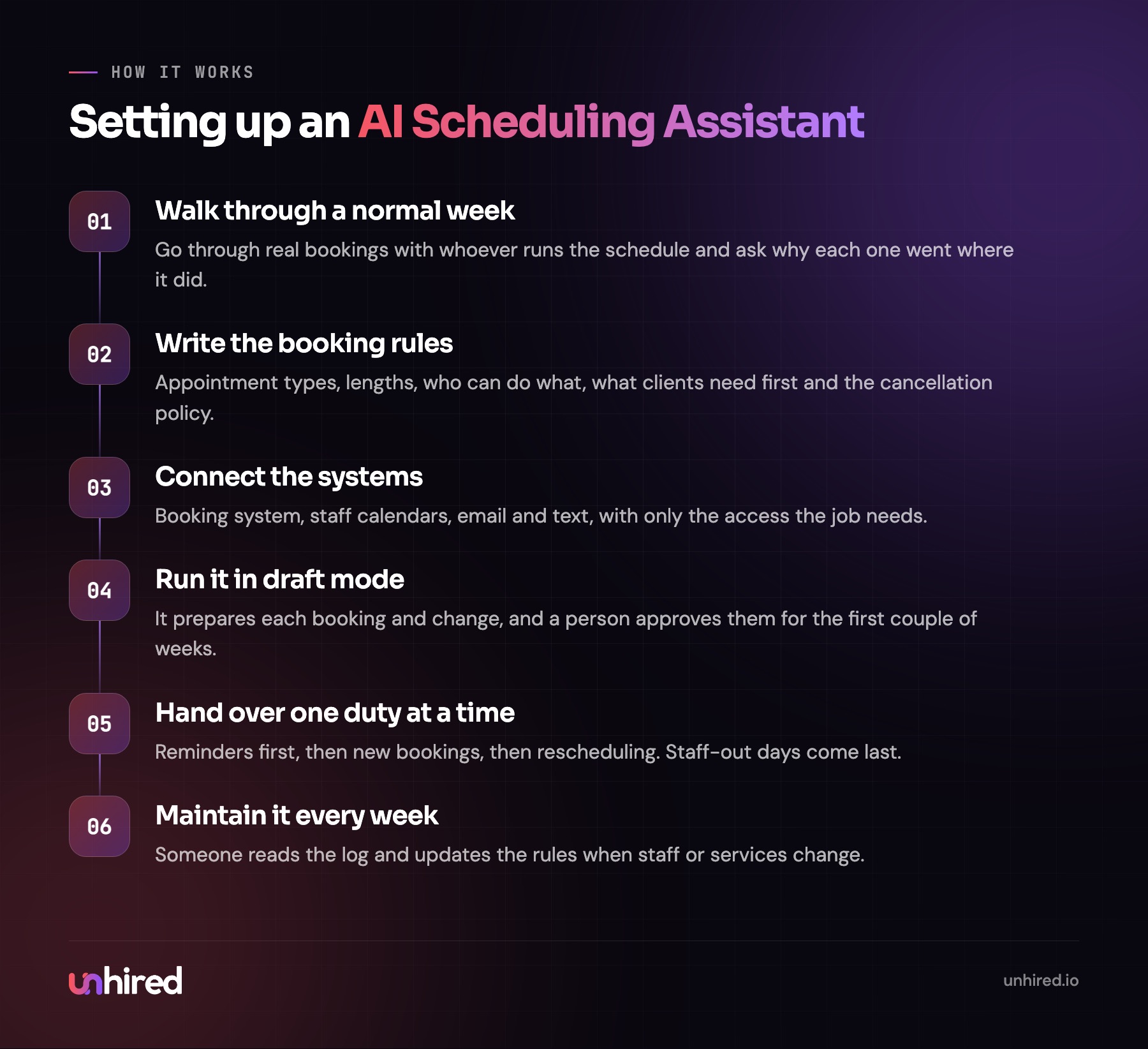
The step I'd never skip is sitting with whoever runs the schedule today and going through a normal week of bookings one at a time, asking why each one went where it did. That's where the unwritten rules come out: the client who must always see the same practitioner, or the vendor who only does mornings.
After that, it runs in draft mode for the first couple of weeks: it prepares each booking and change, and a person approves it. Reminders usually go live first, then new bookings, then rescheduling, and staff-out days last, because they need the most judgment. After launch, someone reads the log every week and updates the rules when a staff member joins or a service changes.
Where it fits and where it doesn't
If your business runs on a calendar that someone rebuilds by hand every time a client cancels or a staff member is out, an AI Scheduling Assistant can hold most of that job, and the person who does it today gets back the hours they spend on the phone moving appointments. If you book a handful of appointments a week and your online booking page handles them, you don't need one yet. If the scheduling is tangled up with answering every call that comes in, the AI Receptionist post is the closer fit, and if it's part of a wider office job, the AI Administrative Assistant post covers that.
A useful first step takes an afternoon. Write down your booking rules on one page: each appointment or visit type, how long it takes, who can do it, what the client needs beforehand, and what happens when someone cancels late. If you can't fill the page without asking the person who runs the schedule, that's the job an AI Scheduling Assistant would be taking on. AI Employee assessments, such as the one offered by Unhired, can be a good place to start if you want to check the whole role.
Wage data: US Bureau of Labor Statistics, Occupational Employment and Wage Statistics, May 2025 (SOC 43-5032), Occupational Outlook Handbook and Employer Costs for Employee Compensation. The clinic day is an example built from the duties in this post.